Nationwide Heavy Haul and Vehicle Transport

Boat Shipping South Carolina, SC
  • Home
  • Blog
  • What Is the Best Way to Transport a Motorcycle?

What Is the Best Way to Transport a Motorcycle?

Boat Shipping South Carolina, SC
What Is the Best Way to Transport a Motorcycle?

The best way to transport a motorcycle is enclosed trailer transport when protection matters most. A 2026 Forbes Home study found an average enclosed price of about $1,200 for a 635-mile shipment. The same sample route averaged $850 with open transport.

Enclosed trailers shield motorcycles from weather and road debris. A wheel chock keeps the front tire positioned while suitable tie-downs limit movement. Open trailers cost less and can still work well for standard motorcycles.

The right choice changes with distance and motorcycle value. DIY trailer transport can make sense for a short move when you have a suitable tow vehicle. Long trips introduce more driving time and equipment risk.

Which Motorcycle Transport Method Is Best?

Enclosed transport provides the highest overall protection because the motorcycle remains inside a covered trailer. Open transport offers better value for ordinary bikes. A dedicated motorcycle trailer works well for shorter DIY moves when the tow vehicle and loading equipment meet the required weight ratings.

Here is how the main options compare:

Method 2026 planning cost Protection Best use
Open trailer transport About $780 to $850 average Moderate Standard motorcycles
Enclosed trailer transport About $1,080 to $1,200 average High Valuable motorcycles
DIY motorcycle trailer About $400 to $500 cross-country rental Depends on setup Experienced DIY hauling
Tow dolly About $150 to $300 rental Low Short moves with suitable bikes

Extra Space Storage reports an average of about $780 for open transport. Its enclosed average is about $1,080. Forbes Home found a similar price gap in its July 2026 quote research.

Motorcycle transport should keep the bike upright throughout the trip. A motorcycle placed on its side can develop fluid problems or suffer cosmetic damage.

The insider tip is to select the loading method before comparing prices. A cheaper trailer becomes poor value when it lacks a wheel chock or suitable anchor points.

When Is Enclosed Transport the Better Choice?

Enclosed transport is the better choice for motorcycles with expensive paint or fragile exterior parts. The covered trailer blocks direct exposure to rain and highway debris. Forbes Home found that enclosed service costs about 40% to 50% more than open transport on average.

Consider enclosed motorcycle transport when cosmetic damage would be expensive to correct.

It makes particular sense for:

  • Classic motorcycles with difficult-to-match finishes.
  • Custom bikes with exposed painted components.
  • High-value motorcycles where minor damage creates major loss.
  • Low-clearance motorcycles that need specialized loading.

The additional price pays for more than a roof. Enclosed equipment may include a hydraulic liftgate or lower loading angle.

Open trailers expose the motorcycle to normal weather. They also expose it to road dirt thrown by surrounding traffic.

A durable commuter bike may not need maximum coverage. Spending several hundred dollars more can be unnecessary when normal exterior exposure presents little financial risk.

The decision becomes easier when you compare the enclosed premium with likely repair costs. A $350 transport upgrade can be sensible when a custom fairing costs far more to replace.

When Does Open Transport Make More Sense?

Open transport makes more sense when price matters more than full exterior protection. It is widely available and usually costs less. Forbes Home found an $850 average open quote for its 635-mile sample route while enclosed service averaged $1,200.

The motorcycle still needs secure loading equipment. Open service should use an appropriate wheel restraint with tie-downs that prevent shifting.

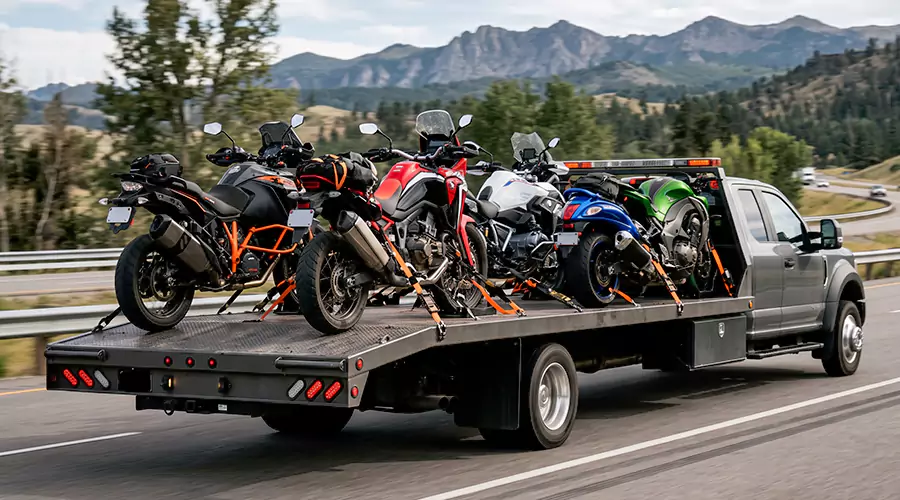
Motorcycle transport services can carry several bikes on one trailer. Shared capacity helps reduce the cost for each customer.

Open shipping works especially well for a standard cruiser with factory paint. It can also suit a used sportbike.

Weather exposure is the main trade-off. Rain itself does not normally damage a road motorcycle. Highway debris presents a greater cosmetic concern.

Forbes Home reports that open transport is usually the least expensive commercial option. Terminal pickup can lower the price further in some cases.

A motorcycle cover should not be added without carrier approval. A loose cover can flap against paint during highway travel.

Can You Transport a Motorcycle Yourself?

DIY transport can work when you have a suitable tow vehicle and a motorcycle-specific trailer. The trailer must support the motorcycle’s weight. A front wheel chock controls forward movement. Suitable anchor points allow the bike to remain upright throughout the trip.

Extra Space Storage places a cross-country motorcycle trailer rental near $400 to $500. A tow dolly can cost about $150 to $300.

A trailer is generally more stable than a tow dolly. The full motorcycle remains off the roadway.

The bike should sit near the trailer centerline. Place the front tire firmly inside the wheel chock.

Use suitable straps at secure structural points. Avoid placing hooks against painted surfaces.

Extra Space Storage recommends checking strap tension after about 30 minutes of driving. Continue checking the setup during longer trips.

Shipping a motorcycle yourself also adds vehicle fuel costs. Hotel expenses can make a long DIY trip more expensive than expected.

Never depend on the kickstand to support the motorcycle during transport. The bike should be secured upright by the transport system.

How Should a Motorcycle Be Secured?

A motorcycle should remain upright with the front wheel blocked against movement. Tie-downs must keep the motorcycle from shifting during acceleration or braking. FMCSA requires commercial cargo to remain firmly immobilized by adequate securement devices throughout interstate transport.

FMCSA states that cargo likely to roll must use a chock or equivalent restraint. Tie-downs must also remain secured during transit.

For a motorcycle trailer:

  • Center the bike before applying tension.
  • Place the front wheel in a suitable chock.
  • Attach straps to strong motorcycle points.
  • Add rear stabilization before driving.

Do not attach straps to fragile mirrors or plastic body panels.

The suspension can be compressed slightly to maintain strap tension. Excessive compression can place unnecessary stress on seals.

A common mistake is securing only the handlebars. Rear movement can still allow the motorcycle to shift sideways.

Use soft loops when a metal hook could contact painted parts.

The motorcycle transport interstate setup should remain stable under normal braking forces. Commercial carriers must meet federal cargo securement requirements.

How Much Does Each Transport Option Cost?

Motorcycle transport prices range from roughly $425 to $2,500 in current 2026 research. Distance creates a major part of the difference. Enclosed equipment raises the price. Larger touring motorcycles can also cost more because they occupy additional trailer space.

Forbes Home found these distance ranges:

Distance 2026 reported range
Up to 500 miles $425 to $650
501 to 999 miles $650 to $750
1,000 miles or more $750 to $2,500

The broad range above combines different service types. Open transport normally stays near the lower side. Enclosed service moves toward the upper side.

Extra Space Storage estimates open cross-country transport at $700 to $1,200. Its enclosed estimate reaches $850 to $1,500.

The motorcycle transport cost can rise for a touring motorcycle. A trike can cost more because its width uses substantially more trailer space.

A useful motorcycle transport cost per mile comparison should use the same trailer type. Short routes usually have higher mileage rates because loading work remains similar.

Current interstate motorcycle transport prices should be treated as market estimates. Fuel prices and trailer availability can change the actual offer.

The lowest total price should not decide the method by itself. Equipment fit matters more when the motorcycle is difficult to load.

How Should You Prepare the Motorcycle?

Preparation starts with cleaning the bike and documenting its condition. Check tire pressure before loading. Reduce the fuel level according to carrier requirements. Remove loose accessories that could shift or detach during transport. Good preparation reduces disputes when the motorcycle reaches its destination.

Use this checklist:

  • Wash the motorcycle before inspection.
  • Photograph both sides in good light.
  • Check the tires for proper inflation.
  • Remove detachable luggage before pickup.
  • Disable an alarm when required.
  • Record the odometer reading.
  • Photograph existing scratches separately.
  • Keep the motorcycle key available.

Extra Space Storage recommends keeping the fuel level at about one-quarter tank or less for transport.

Remove helmets before the motorcycle enters the trailer. Transport them separately.

Loose GPS mounts can detach during vibration. Removable phone holders should also come off.

Keep the motorcycle clean until pickup. Fresh dirt can make an existing scratch difficult to distinguish from new damage.

The door to door motorcycle transport inspection should occur before the motorcycle leaves your possession. Review the condition document before signing.

What Warning Signs Should You Check?

Warning signs include missing federal registration and unclear transport equipment. A written estimate should identify the shipping method. The business should explain whether it acts as a broker or carrier. The assigned carrier should match the company information shown in federal records before pickup begins.

Check these eight warning signs:

  • No MC number appears: Interstate commercial transport businesses should have the required federal authority.
  • The trailer type is missing: You should know whether the motorcycle will travel open or enclosed.
  • No wheel restraint is available: The motorcycle needs protection against rolling.
  • The quote is unusually low: Compare it with matching transport offers.
  • The motorcycle model is missing: Size affects trailer planning.
  • Insurance details are unavailable: Review cargo coverage before pickup.
  • The assigned carrier is unknown: Confirm the business that will actually move the bike.
  • The final document shows another amount: Resolve the difference before releasing the motorcycle.

A claim of best motorcycle transport should not replace equipment verification.

The best interstate motorcycle transport setup needs the correct trailer and proper securement. Marketing language cannot confirm either one.

What Can You Check Yourself Before Transport?

You can complete a safe five-minute check by measuring the motorcycle and reviewing its loading points. Confirm the bike rolls normally. Check tire pressure. Identify secure structural areas for straps. Compare the motorcycle’s weight with the trailer rating before any loading begins.

Start with the manufacturer’s published wet weight when available.

Compare that figure with the trailer’s payload capacity. Do not use the trailer’s total weight rating as the available motorcycle capacity without accounting for the trailer itself.

Inspect the front wheel chock. It should fit the tire without pressing against brake components.

Check anchor points for corrosion or damage. A strong strap cannot compensate for a weak trailer anchor.

Push the motorcycle only on level ground. Confirm that both wheels rotate normally.

The local motorcycle transport decision can be made after this equipment check. A short distance does not make an unsafe trailer acceptable.

When Should You Contact a Professional Transporter?

Professional transport becomes useful when the motorcycle is valuable or difficult to load. It also helps for long routes where DIY driving adds substantial time. A specialist can provide enclosed equipment or liftgate loading. The carrier should document the motorcycle’s condition before taking possession.

Consider professional help when a motorcycle has low ground clearance. A steep loading ramp can scrape the exhaust system.

An inoperable motorcycle also needs equipment review. A bike that cannot roll may require additional loading tools.

Compare motorcycle transport companies by federal authority and equipment.

The best motorcycle transport companies should describe the trailer before pickup. Verify the assigned carrier instead of relying only on the broker’s website.

A motorbike transport service should explain the securement method in advance. Ask whether a wheel chock is used.

Motorcycle delivery companies should also provide condition documentation at pickup. Keep your copy through delivery.

Long distance motorcycle transport becomes more attractive when hotel expenses would make DIY hauling costly.

National motorcycle transport requires the assigned commercial carrier to follow applicable interstate cargo rules.

How Can You Reduce Transport Risk?

You can reduce transport risk by choosing equipment that matches the motorcycle and checking every restraint before departure. Keep the bike upright. Use a wheel chock when trailering. Document the condition before pickup. Recheck tie-down tension during a DIY trip.

Use this preparation timeline:

  • Two weeks before transport: Choose the trailer method.
  • One week before transport: Confirm motorcycle dimensions.
  • Two days before transport: Remove loose accessories.
  • Transport day: Photograph the bike before loading.

Avoid last-minute equipment substitutions. A different trailer can have another ramp angle.

Never assume the motorcycle fits because its weight is below the trailer limit. Handlebar width can create a separate clearance problem.

Cheap motorcycle transport should still include appropriate restraints.

Shipping motorcycle across country calls for stronger planning because road time increases the opportunity for straps to loosen.

Car and motorcycle transport on the same carrier requires each vehicle to have its own suitable securement system.

International motorcycle transport may require crating or separate freight preparation. Those requirements differ from domestic trailer movement.

The best way to transport a motorcycle is the method that controls movement while matching the bike’s value. Enclosed transport provides the strongest overall protection. Open transport can reduce cost for standard motorcycles. A DIY trailer can work for shorter moves when the equipment is correctly rated. This week, check your motorcycle’s weight and decide how much weather protection the trip requires.

YOU MAY ALSO LIKE

Need Help?

One call solves it all.

Get Instant Quote